Marriott Hotel: ACMV Retrofit with VSDs and a Centralized BMS
Cobler retrofitted a Marriott hotel’s ACMV — VSDs cut maximum demand ~3.2% and energy ~4.9% — centralized a broken BMS, and traced weak cooling to a duct leak and over-designed air handling.
Key Results
4.9%
About the client
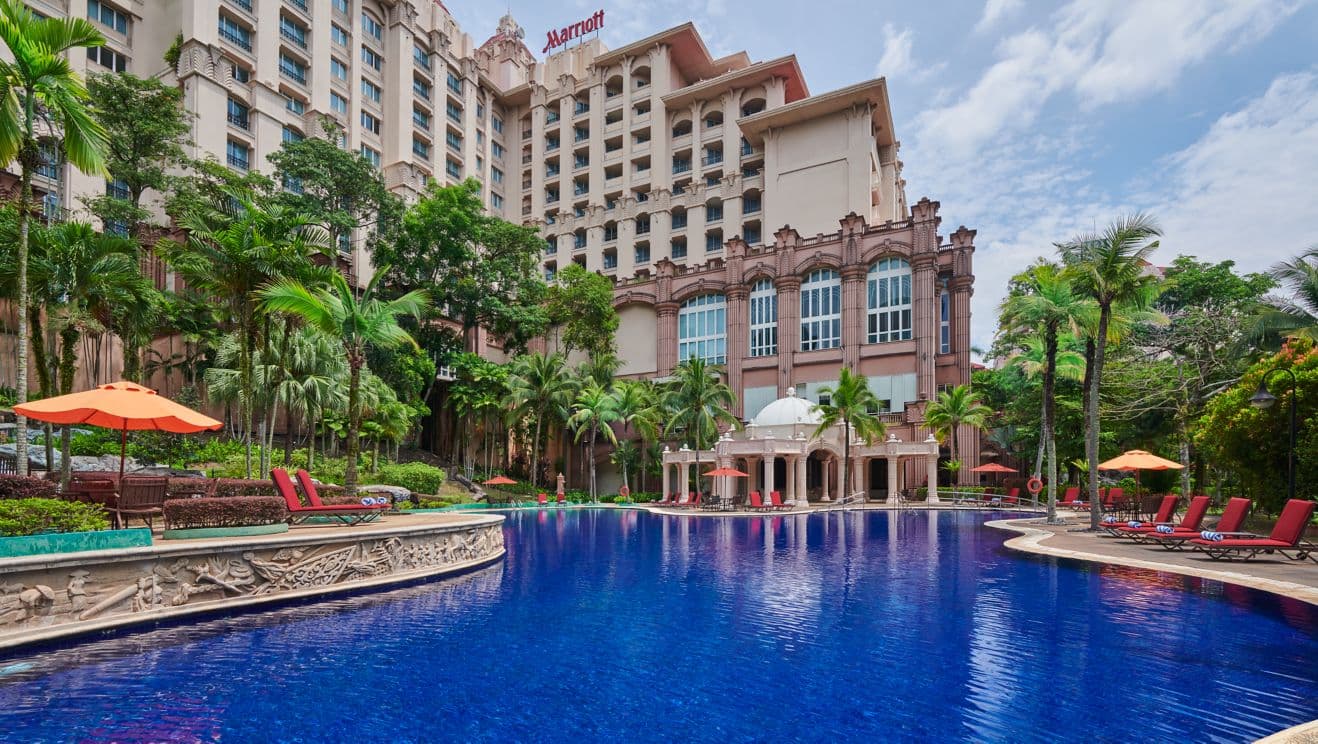
Marriott runs in the upper tier of Malaysian hospitality, where guest comfort is not negotiable and the building never closes. Behind that comfort sits a large ACMV system: air handling units, fresh air intake, exhaust fans and the motors that drive them, all run by a building management system. At this property, that BMS had grown disjointed and partly broken over the years, and much of the ACMV still ran on old, fixed-speed motor starters. Cobler retrofitted both.
The challenge
Two problems compounded each other.
First, the controls. The existing BMS had become a patchwork of disconnected systems, and parts of it no longer worked. An operator could not see or run the building from one place, so day-to-day operation took more people, more time and more guesswork than it should.
Second, the motors. Much of the ACMV ran on across-the-line starters — direct-on-line, star-delta and auto-transformer — which start motors hard and then run them at one fixed speed. That has a direct cost. The inrush at start and the flat-out running push up the building's maximum demand, the peak that sets a large part of the TNB bill, and a fixed-speed fan has no way to ease back when a space does not need full airflow.
The solution
Cobler retrofitted the hotel's ACMV controls and drives, and brought the whole system under one roof.
- One centralized BMS. The disjointed, partly broken systems were consolidated into a single platform, so the building is seen and operated from one place. That is the difference between a team firefighting across several screens and one running the building from a single clear view, a direct gain in operational efficiency.
- Old starters to VSDs. The direct-on-line, star-delta and auto-transformer starters were replaced with variable speed drives. VSDs start motors softly, cutting the inrush that spikes maximum demand, and let fans run at the speed the load actually needs instead of full tilt, lowering both maximum demand and energy.
- Air side tuned to demand. With the drives and controls in place, the AHUs, fresh air intake and exhaust fans were tuned to run to occupancy and air quality rather than a fixed schedule, holding comfort and IAQ while the system does less work.
CobiNeural sits over the retrofitted system so the behaviour and the demand stay visible and verifiable.
What the retrofit uncovered
A retrofit like this does more than swap equipment. Once the motors were on drives and the readings were in front of us, the system started telling us things the old setup had hidden.
Soon after the changeover, guests reported that some areas were not cooling as well as before. The old fixed-speed motors had drawn around 40 A in normal operation; on the drives, the current only matched that 40 A when we ramped them up to 55 Hz, above the 50 Hz the motors are rated for. The fans were effectively running flat out, and the spaces still were not reaching the cooling they needed.
That sent us looking past the motors and into the air system. We traced it to a leak in the ducting that was letting humid air in and pushing the humidity inside the duct above 70%. That moisture was the real problem. It loaded the system enough that the drives ran at full speed and still could not deliver the cooling the space wanted. The old across-the-line starters had hidden the fault for years by simply running flat out all the time, paying for it in energy while no one could see why.
The drives told us something else as well. The air handling units had been over-designed for the building, oversized enough that the system runs at a high static pressure. That keeps the drives working harder than they should, so the VSDs we fitted are not yet stretched anywhere near their potential. The energy already saved came with the new drives barely working for it, which means most of the gain is still ahead.
This is the part that does not show up on a spec sheet. Putting the building on drives and live readings turned a vague "it feels warm" complaint into a specific, located mechanical fault the hotel can now fix, so the ACMV can deliver proper cooling and drier air at lower energy rather than papering over the problem.
The result
The numbers show it. Comparing the months before the retrofit with the months after, average maximum demand came down about 3.2% and average monthly energy use about 4.9%.
Beyond the bill, the hotel now runs its ACMV from one centralized system instead of a broken, disjointed one, which takes real effort out of daily operation. And those savings stand even before the faults we surfaced are addressed: the duct leak driving the humidity, and the over-designed air handling keeping the new drives from stretching. There is real headroom still to come. For the operator, it is a lower bill, a clear picture of what to repair next, and a building that is far easier to run.
See how the same approach works on other sites in our case studies, or talk to us about ACMV retrofits and BMS centralization for your property.
Ready to achieve similar results?
Let's discuss how CobiNeural can transform your energy management.